Leave A Message
If you are interested in our products and want to know more details,please leave a message here,we will reply you as soon as we can.
For years, a tomato paste buyer's checklist ended at Brix, color, Howard mold count, and price per ton. Packaging was an afterthought — "cans or drums, whichever is cheaper." That is changing fast.
Two forces are pushing packaging into the middle of the negotiation. First, retailers and food-service operators in the EU and North America are setting packaging and carbon targets that roll downhill to importers. The EU Packaging and Packaging Waste Regulation (PPWR) takes effect on 12 August 2026, converting "recyclable design" from a voluntary claim into a binding requirement across major food markets. Second, consumers increasingly read packaging as a signal of quality and sustainability, especially for shelf-stable tomato products competing on retail shelves.
This guide breaks down the three formats now defining sustainable tomato paste packaging — recyclable bag-in-box for bulk, Tetra Recart paper-based cartons for retail, and low-carbon sourcing as an emerging specification — so you can compare them on barrier performance, recyclability, and total cost rather than on marketing language alone.
| Format | Typical Use | Barrier | Recyclability Story | Trade-off |
|---|---|---|---|---|
| Mono-material bag-in-box (MonoFlex-style) | Bulk B2B, food service | Thin EVOH + PE | >95% PE, fits PE recycling stream | Higher engineering cost; still niche |
| Tetra Recart paper-based carton | Retail shelf, ready-to-eat sauces | Paperboard + barrier layer | Lightweight, lower material use, perceived sustainable | Requires carton-specific filling line |
| Aseptic drums / bulk aseptic bags | Industrial re-pack, export | Multi-layer | Reuse/recycle varies by region | Less differentiated for retail |
The key shift: "sustainable" no longer means one winner. It means matching the right barrier and recyclability profile to the right channel.
Bulk tomato paste — the 200 kg+ aseptic bags and drums that dominate international trade — has long been the hardest format to make recyclable. Conventional multi-layer films combine polyethylene with aluminum or nylon to hit the low oxygen transmission rates that sensitive liquids need. The problem: those layers are inseparable, so the film falls outside mainstream PE recycling.
Aran Group's MonoFlex solution, which won the Gold Award in the "Packaging that Saves Food" category at the 2026 WorldStar Packaging Awards, addresses exactly this gap. Its structure is more than 95% polyethylene with a minimized EVOH barrier layer, engineered to meet Design for Recycling guidelines for PE streams while still delivering the oxygen barrier that liquid foods require.
What this means for a bulk tomato paste buyer is concrete:
The honest caveat: mono-material flexible packaging is still a premium engineering solution, and availability varies by region and format size. When you request it, ask the supplier for the film structure declaration and the recycling certification, not just the marketing term.
On the retail side, the fastest-growing alternative to cans is the Tetra Recart paper-based carton for shelf-stable foods. Tetra Pak positions it for exactly the category this audience cares about: ready-to-eat meals and international cuisines built on tomato-based sauces — Indian curries, Mexican salsas, passata, and cooking bases.
Three advantages drive adoption:
The trade-off is upstream: filling a carton requires a dedicated filling line, so the decision is often made jointly between the brand owner, the co-packer, and the packaging supplier. For an importer evaluating a private-label tomato sauce program, Tetra Recart is less a "buy this film" decision and more a "choose this pack format" decision — one that Tetra Pak supports with market insights, recipe co-creation, and pack design.
Packaging is only half the sustainability story. The other half is the carbon footprint of the tomato paste itself, and it is quietly becoming a procurement metric.
Egypt's Paste & Juice Co. published a full carbon footprint analysis showing emissions per product of 0.275 tCO₂e — a figure it reports as significantly lower than EU benchmarks — split across Scope 1 (55.97%), Scope 2 (6.39%), and Scope 3 (37.64%). The company has committed to a further 25% reduction in total emissions by 2027.
Why this matters for buyers:
The practical takeaway: treat a carbon number the way you treat a Brix claim — ask for the method behind it before you put it in a contract.
When a supplier leads with "sustainable packaging," ask five questions before comparing prices:
What is the most sustainable packaging for bulk tomato paste?
For bulk B2B volumes, mono-material bag-in-box is the leading direction. Award-winning structures such as Aran Group's MonoFlex use more than 95% polyethylene with a minimized EVOH barrier, making the film compatible with PE recycling streams while protecting oxygen-sensitive tomato paste. The same practical logic applies to aseptic bag-in-box and aseptic drum formats used for tomato paste in the 18–30% Brix range. When comparing bulk suppliers, request the film structure declaration and recyclability certification rather than accepting the term "sustainable" at face value.
Is Tetra Recart a good alternative to cans for tomato sauce?
For retail-ready tomato sauces and ready-to-eat preparations, yes — Tetra Recart's paper-based carton offers lighter weight, easy use, and a stronger sustainability perception than cans, while remaining shelf-stable. The main consideration is upstream: cartons require a dedicated filling line, so the format decision usually involves the brand owner, the co-packer, and the packaging supplier together. Importers evaluating a private label or OEM tomato sauce program should treat it as a pack-format decision made early in product development.
How do I verify a tomato paste supplier's carbon footprint claim?
Ask which GHG Protocol scopes are included, what the functional unit is (per ton of paste at a stated Brix, or per final product), and whether the figure is independently verified. A credible supplier will publish scope-level detail — for example, Paste & Juice Co. reports 0.275 tCO₂e per product with a clear Scope 1/2/3 breakdown and a stated reduction target — rather than a single unbacked headline number.
Does sustainable packaging affect tomato paste shelf life?
It should not, if the barrier is specified correctly. The engineering challenge is that recyclable mono-material structures must still hit low oxygen transmission targets. Reputable suppliers validate shelf life for the specific Brix, format, and processing method (hot break or cold break) you are buying. Always confirm the stated shelf life in writing for your exact specification.
What certifications should I look for beyond packaging?
Beyond packaging, verify the food-safety and compliance certificates that matter for your destination market: HACCP, BRC, and Halal certification for markets requiring it, plus any FDA-related compliance for US-bound product. A serious export supplier will also provide full export documentation and customs support, and should be willing to send free samples for quality testing before committing to a minimum order quantity.
Where does most export tomato paste come from, and how is it packed?
China is the world's largest tomato paste exporter, with production concentrated in Xinjiang and Inner Mongolia. Product is typically shipped as aseptic bag-in-box or drums for industrial re-packing, and in cans, sachets, pouches, and squeeze bottles for retail and food-service channels. A full-service supplier will offer the complete format range — from bulk aseptic to private label sachets — so you can source one consistent specification across channels.
About the Author/Organizer
Zasavor is a specialized tomato product export brand under Conch Group, a Fortune Global 500 company. We provide one-stop OEM/ODM export solutions for tomato paste, tomato sauce, and tomato ketchup.
"We Make the Tomato Products. You Make the Brand."
Why buyers source with us:
- Raw material from Xinjiang and Inner Mongolia — 100% fresh tomatoes, zero additives.
- Full 18–30% Brix range (including 22–24%, 24–26%, 28–30%), with hot break and cold break processes.
- HACCP, Halal, and BRC international certifications for fast customs clearance.
- OEM/ODM private label capability with 95% flavor-matching accuracy, plus free samples for testing.
- Annual capacity of 100,000+ tonnes, exported to 86+ countries.
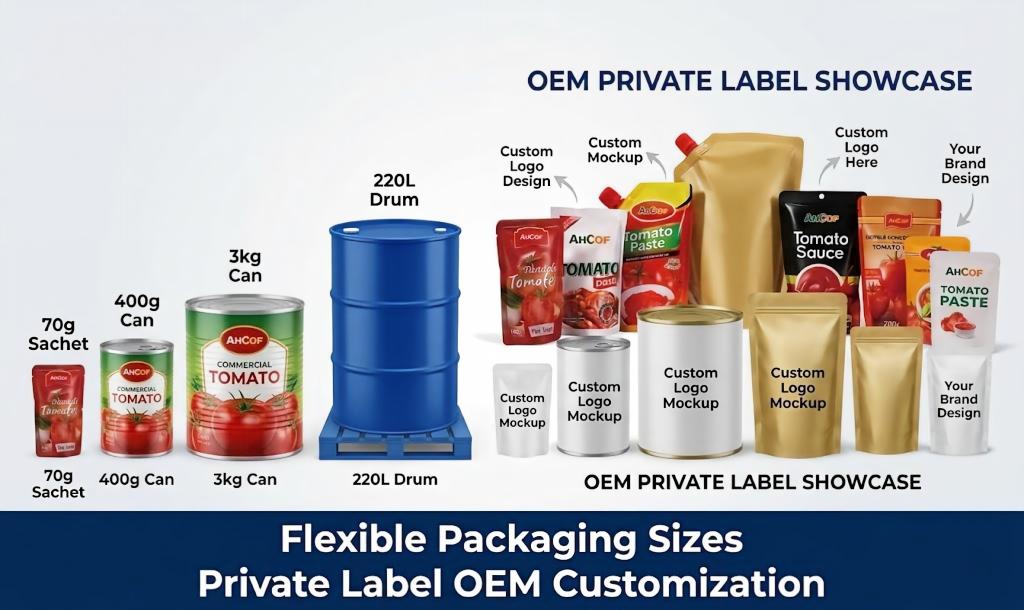
- Full packaging formats: sachets (flat and stand-up pouches), tin cans, aseptic bag-in-box/drums, squeeze bottles, and food-service bulk packs.
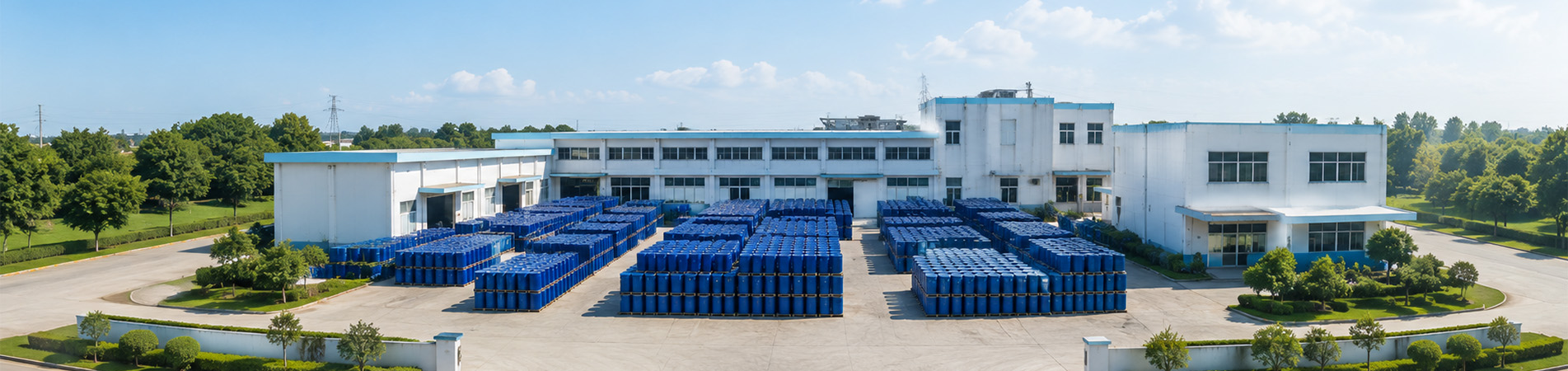
- Factory in the Chizhou Economic and Technological Development Zone, Anhui — 60 mu total area, 28,000 m² planned floor space — with domestic warehousing, multimodal transport (FCL/LCL sea, rail, road), and full export documentation and customs support.
[Contact the Zasavor export desk to request samples or a quotation →]


 English
 Français
 Deutsch
 Italiano
 Pусский
 Español
 Português
 Melayu
 Indonesia
 العربية