
Leave A Message
If you are interested in our products and want to know more details,please leave a message here,we will reply you as soon as we can.
For food importers and wholesale buyers, evaluating tomato paste samples before placing a bulk order is an essential step in reducing purchasing risks. However, a sample that meets expectations does not automatically guarantee that the final shipment will have identical quality. Buyers need to understand the differences between sample evaluation and bulk order verification.
When purchasing tomato paste from an overseas manufacturer, importers should check product specifications, Brix levels, color, consistency, flavor, packaging, food safety documentation, and production batch control. They should also confirm that the approved sample accurately represents the product that will be manufactured and shipped in commercial quantities.
This guide explains what importers should check first when moving from tomato paste samples to bulk orders, helping buyers make more informed purchasing decisions and establish reliable long-term supplier relationships.
Requesting samples allows buyers to evaluate whether a supplier's product meets their technical, commercial, and application requirements before committing to a large purchase.
For importers, distributors, and food manufacturers, tomato paste samples provide an opportunity to assess several important characteristics.
Product quality: Buyers can examine color, consistency, aroma, taste, and overall appearance.
Brix level: Samples help verify whether the tomato paste concentration matches the required specification, such as 28–30% Brix or 36–38% Brix.
Application suitability: Food manufacturers can test whether the product performs well in sauces, soups, seasonings, and other food applications.
Packaging compatibility: Buyers can evaluate packaging materials, sealing quality, handling convenience, and storage requirements.
Supplier responsiveness: The sampling process also provides an opportunity to assess communication, technical support, and the supplier's ability to understand specific requirements.
A well-organized sample evaluation helps establish a clear quality standard before commercial production begins.
Before approving a sample, importers should evaluate more than its appearance. Several technical and sensory indicators can influence the suitability of tomato paste for different markets and applications.
Brix is one of the most important specifications in tomato paste purchasing. It indicates the concentration of soluble solids and is commonly used to classify tomato paste products.
Typical commercial specifications include:
28–30% Brix: Commonly used for food processing and various commercial applications.
36–38% Brix: Higher-concentration tomato paste, often selected when buyers require more concentrated raw material.
Buyers should check the Brix level using an appropriate calibrated refractometer and confirm the measurement method and agreed specification with the manufacturer.
It is also important to understand that Brix alone does not determine overall product quality. Color, consistency, acidity, and other quality indicators should be evaluated together.
Color is an important quality consideration, especially for importers supplying retail markets and food manufacturers with consistent product appearance requirements.
When evaluating samples, buyers should check:
Whether the color is uniform.
Whether the product has an appealing natural tomato-red appearance.
Whether there are unusual dark spots or visible foreign materials.
Whether the color matches the agreed product specification.
Color differences may be influenced by tomato variety, raw material maturity, processing conditions, and storage conditions.
Tomato paste consistency affects its processing performance and final food applications.
Buyers should observe whether the product is excessively watery, overly thick, or uneven in texture. If viscosity is an important purchasing requirement, the measurement method and acceptance criteria should be agreed upon in advance.
Hot Break (HB) and Cold Break (CB) tomato paste can have different viscosity characteristics because of differences in processing conditions.
Generally, Hot Break tomato paste is associated with higher viscosity, while Cold Break tomato paste is often selected for applications where a different flavor and texture profile is preferred.
A good tomato paste sample should have a characteristic tomato flavor and aroma suitable for its intended application.
Importers should evaluate:
Natural tomato aroma.
Appropriate balance between sweetness and acidity.
Absence of unusual or unpleasant odors.
Consistency of flavor after dilution or cooking, where relevant.
For commercial purchasing, buyers should also confirm the agreed pH and acidity requirements rather than relying only on sensory evaluation.
Visual inspection and tasting cannot establish whether a tomato paste sample is microbiologically safe.
Importers should request relevant quality documentation, such as a Certificate of Analysis (COA), and confirm applicable microbiological criteria, processing controls, and food safety requirements for the destination market.
Depending on the product and purchasing agreement, buyers may also request information about pesticide residues, heavy metals, or other applicable contaminant limits.
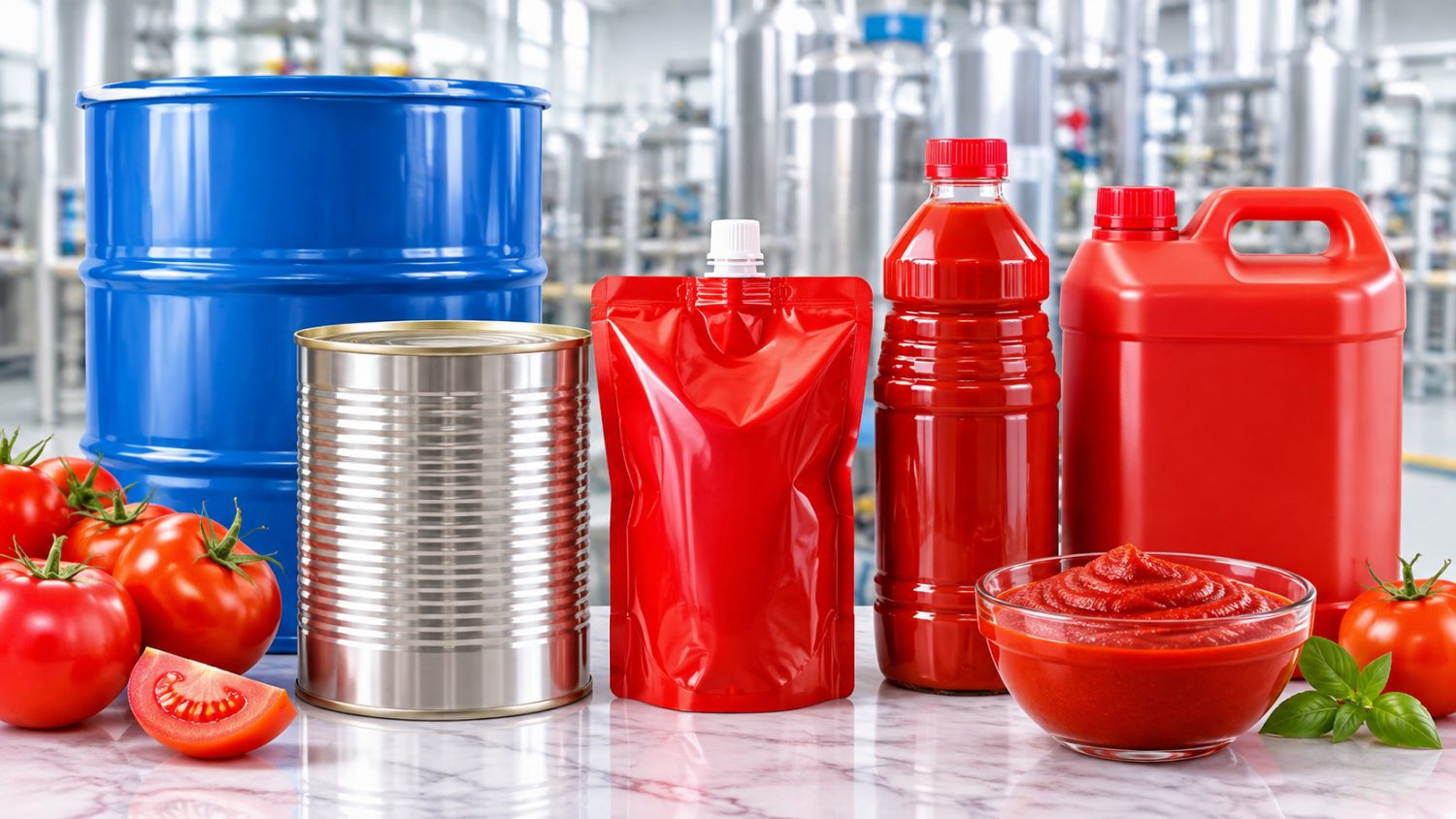
One important point that importers sometimes overlook is that sample packaging may differ from commercial bulk packaging.
A manufacturer may send small quantities in laboratory containers or sample pouches, while the actual commercial order may use aseptic drums, tinplate cans, or flexible tomato paste pouches.
Buyers should therefore evaluate both the product itself and the packaging intended for the final order.
| Packaging Type | Typical Application | What Buyers Should Check |
|---|---|---|
| Aseptic Drums | Industrial and bulk food processing | Aseptic liner, sealing, storage and handling |
| Tinplate Cans | Retail and foodservice distribution | Can integrity, internal coating and sealing |
| Flexible Pouches | Retail, wholesale and foodservice | Film quality, sealing strength and leakage |
| Plastic Bottles | Retail and consumer applications | Material suitability, cap sealing and durability |
For buyers importing large quantities of tomato paste, aseptic drum packaging is commonly considered for industrial raw material supply.
Flexible pouches and tinplate cans may be more suitable for retail distribution and foodservice channels, depending on the target market.
Before placing an order, importers should confirm the exact packaging material, net weight, dimensions, carton configuration, labeling requirements, and packaging specifications.
Once a sample has been approved, the next step is to establish a clear commercial and technical agreement.
A sample approval should not replace bulk order verification. Importers should confirm the following details before authorizing production.
The approved specifications should be documented in the purchase agreement or product specification sheet.
Important items include:
Product type: Tomato Paste, Tomato Sauce, or Ketchup.
Brix level and acceptable tolerance.
Hot Break or Cold Break processing type, where applicable.
Color and consistency requirements.
pH and acidity specifications.
Microbiological and other applicable safety requirements.
Ingredients and any relevant additive requirements.
Both parties should use the same technical specifications to avoid misunderstandings during production and inspection.
One sample represents a limited quantity of product. A commercial order may involve multiple production batches and significantly larger quantities.
Importers should ask manufacturers how they control consistency throughout production. A professional tomato paste manufacturing process should include raw material inspection, Brix monitoring, controlled processing and sterilization, filling and sealing inspection, batch traceability, and finished product testing.
Important questions include:
Are raw materials inspected before processing?
How are Brix levels monitored during production?
Are processing and sterilization parameters controlled?
How are filling and sealing operations inspected?
Are production batches traceable?
Are finished products tested before shipment?
A reliable manufacturer should have documented quality control procedures and be able to explain how the approved specifications are maintained throughout commercial production.
For large commercial orders, buyers may arrange pre-shipment inspections or independent laboratory testing according to the purchase agreement.
Inspection items may include:
Product specifications and COA verification.
Packaging condition and sealing quality.
Net weight and quantity.
Carton condition and labeling.
Batch numbers and production dates.
Applicable food safety and microbiological requirements.
The inspection scope, sampling method, acceptance criteria, and responsibility for testing costs should be agreed upon before production or shipment.
A supplier may provide an acceptable sample but still need to demonstrate the ability to fulfill a large commercial order.
Importers should confirm:
Available production capacity.
Raw material supply arrangements.
Production lead time.
Packaging material availability.
Estimated shipment date.
Export documentation and logistics arrangements.
This is particularly important for buyers with fixed distribution schedules or seasonal demand.

One of the most important principles in international tomato paste purchasing is that sample approval and bulk order acceptance are two separate stages.
The sample establishes the expected product standard. Bulk order verification confirms whether the commercial goods meet that agreed standard.
The following comparison highlights the main differences.
|
Evaluation Item |
Sample Stage | Bulk Order Stage |
|---|---|---|
| Main Purpose | Evaluate product suitability | Verify commercial consistency |
| Brix | Check sample concentration | Confirm production batch specifications |
| Color | Assess appearance | Check batch consistency |
| Viscosity | Evaluate texture | Verify agreed consistency |
| Taste and Aroma | Conduct sensory evaluation | Confirm product characteristics |
| Packaging | Review sample packaging | Inspect commercial packaging |
| Food Safety | Review available documentation | Verify batch-specific documentation and testing |
| Quantity | Small sample quantity | Contracted commercial quantity |
| Inspection | Initial product evaluation | Production and pre-shipment verification |
For better quality control, buyers should retain an approved reference sample and clearly identify the relevant product specifications, sample date, and approval status.
Where appropriate, both parties can retain sealed reference samples under suitable storage conditions for future comparison.
This helps create a documented reference point if questions arise regarding product quality after shipment.
A systematic purchasing process can help reduce misunderstandings and unexpected quality differences.
Here are six practical steps for international buyers.
Step 1: Define purchasing requirements
Determine the required Brix level, processing type, application, packaging format, destination market, and expected order quantity.
Step 2: Request samples from qualified manufacturers
Ask suppliers to provide samples that match the specifications intended for commercial production.
Step 3: Conduct technical and sensory evaluation
Check Brix, color, consistency, flavor, aroma, and other relevant quality indicators.
Step 4: Confirm the commercial specifications
Document all approved parameters, packaging details, tolerances, and quality requirements.
Step 5: Agree on production and inspection arrangements
Confirm production schedules, batch traceability, quality control procedures, and pre-shipment inspection requirements.
Step 6: Review shipment documents before dispatch
Check the commercial invoice, packing list, Certificate of Analysis, certificate of origin, and other documents required by the destination market and the sales contract.
For international purchases, buyers should also confirm the agreed Incoterms, payment terms, shipping arrangements, and insurance responsibilities.
Following these steps can make the transition from sample evaluation to bulk purchasing more transparent and manageable.
For importers planning repeated purchases, choosing a supplier should involve more than finding the lowest quotation.
A dependable manufacturing partner should offer consistent product specifications, transparent quality management, suitable packaging options, and reliable export coordination.
When evaluating a Chinese tomato paste manufacturer, buyers may consider the following factors:
Raw Material Sourcing: Traceable tomato sourcing and standardized raw material management.
Manufacturing Capability: Automated processing, controlled production procedures, and suitable filling facilities.
Quality Management: Documented inspection procedures, batch traceability, and product testing.
Packaging Flexibility: Options covering bulk drums, tinplate cans, flexible pouches, and plastic bottles.
OEM and ODM Services: Customized specifications, packaging, and private-label solutions.
Export Experience: Experience handling international orders and destination-market requirements.
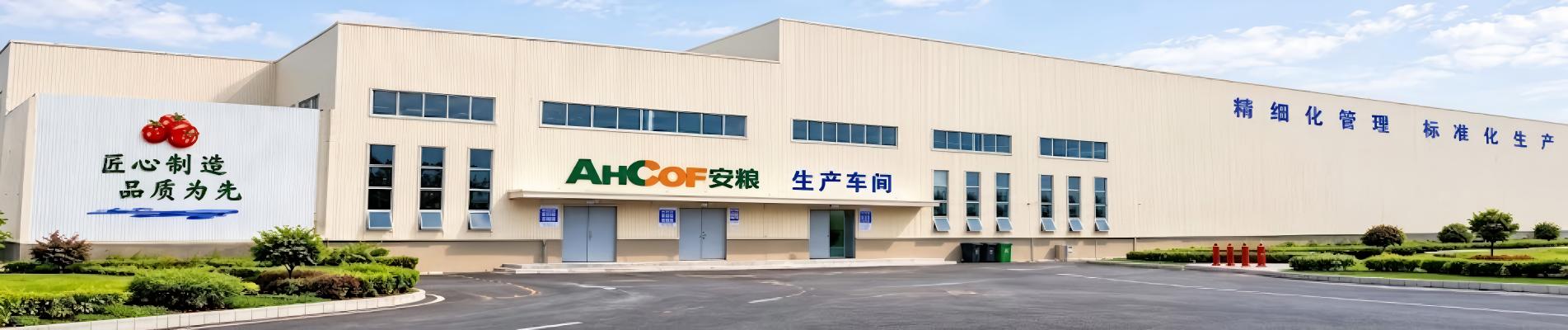
As an experienced tomato paste manufacturer and exporter, Zasavor / AHCOF focuses on providing tomato paste products and customized supply solutions for international food importers, wholesalers, distributors, and food manufacturers.
From product sample evaluation to specification confirmation and commercial production, clear communication between buyers and manufacturers helps establish a more reliable purchasing process.
Whether buyers require concentrated tomato paste for industrial processing or retail-ready products in customized packaging, selecting a manufacturer with suitable production and quality management capabilities is an important step toward long-term cooperation.
Yes. Importers should evaluate samples before committing to a commercial order. Sample testing helps buyers assess Brix, color, consistency, flavor, and application suitability. It also provides an opportunity to confirm product specifications and communicate requirements to the manufacturer.
No. An approved sample establishes the expected quality standard, but it does not automatically guarantee that every commercial batch will be identical. Buyers should confirm production controls, batch traceability, agreed specifications, and inspection procedures before shipment.
Common commercial specifications include 28–30% Brix and 36–38% Brix. The appropriate concentration depends on the buyer's processing requirements and intended application. Importers should confirm the exact specification and acceptable tolerance with the manufacturer.
Yes. Buyers can discuss customized samples based on requirements such as Brix level, Hot Break or Cold Break processing, product consistency, and packaging format. The manufacturer should confirm whether the requested sample represents an available commercial specification.
Depending on the destination market and purchase agreement, buyers may request a Certificate of Analysis, product specification sheet, commercial invoice, packing list, certificate of origin, and applicable food safety or conformity documents. Additional documentation may be required by local import regulations.
Buyers should document the approved sample specifications, confirm production batch controls, request batch-specific quality records, and arrange pre-shipment inspections or independent testing when necessary. Retaining reference samples can also help with future quality comparisons.
The choice depends on the intended application and distribution channel. Aseptic drums are commonly used for industrial food processing and bulk supply, while flexible pouches are suitable for many retail and foodservice applications. Buyers should consider storage, transportation, packaging requirements, and target-market preferences.
Evaluating tomato paste samples is an important first step, but successful importing requires a more comprehensive quality verification process.
Before placing a bulk order, buyers should confirm Brix levels, color, consistency, flavor, packaging specifications, production controls, food safety documentation, and delivery arrangements.
Most importantly, the approved sample and final commercial product should be connected through clearly documented specifications and quality control procedures.
Working with an experienced tomato paste manufacturer can help importers reduce purchasing uncertainty, maintain product consistency, and develop stable long-term supply relationships.
Looking for a reliable tomato paste manufacturer in China?
Contact Zasavor / AHCOF to discuss your required Brix level, product specifications, packaging options, and bulk order requirements. Request a Tomato Paste Sample and Quotation to explore suitable OEM/ODM solutions for your target market.


 English
 Français
 Deutsch
 Italiano
 Pусский
 Español
 Português
 Melayu
 Indonesia
 العربية