
Leave A Message
If you are interested in our products and want to know more details,please leave a message here,we will reply you as soon as we can.

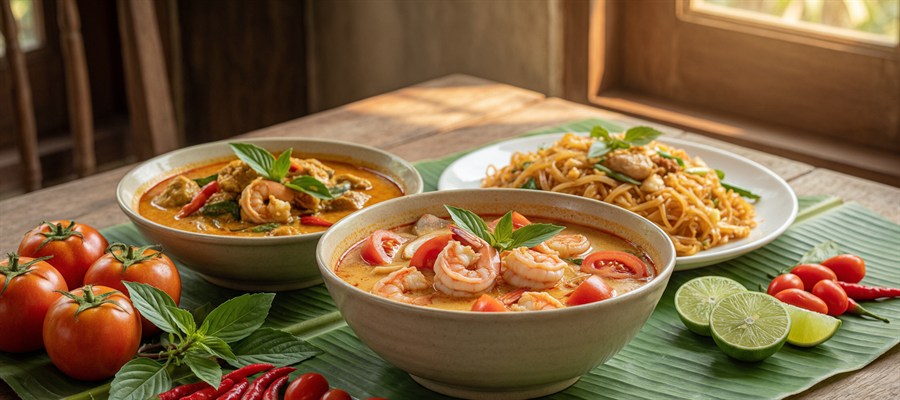
Bangkok — Thailand's food processing industry has been expanding for years, and the ingredient that quietly ties much of it together is tomato paste. The concentrated product, made by cooking and reducing ripe tomatoes, sits at the heart of sauces, ready meals, instant noodles and hotel kitchens. As Thai food exports reach new highs and regional food manufacturing grows, demand for tomato paste imports is climbing — and industry observers say the trend still has room to run.
Thailand's Food Exports Keep Breaking Records
Thailand cemented its position as a global food powerhouse in 2024, when food exports hit a record 1.6 trillion baht and the country ranked among the world's top twelve food exporters, according to official trade data. The food processing sector has been a key contributor, shipping packaged condiments, canned goods and frozen ready-to-eat meals to markets across Asia, Europe and the United States. Behind this export engine lies a simple supply-side reality: many processed food lines depend on imported semi-finished ingredients, and tomato paste is among the most widely used of them.
What Is Driving the Demand for Tomato Paste
Several overlapping trends are pushing consumption higher. The recovery of international tourism has brought hotel, restaurant and catering volumes close to pre-pandemic levels, and tomato-based dishes remain staples on both Western and Asian menus. At the same time, changing lifestyles have lifted demand for convenience foods — ready-to-cook sauces, instant noodle packets and frozen meals all use tomato paste as a base ingredient. Industry reports also point to solid growth in Thailand's seasoning and sauce segment, one of the country's faster-growing food export categories.
On the supply side, Thai tomato production is geared mainly toward the fresh market, where fruit is sold for direct consumption. Processing volumes are limited, which leaves local manufacturers dependent on imported tomato paste — typically shipped in aseptic bags, drums or cans — to fill the gap. This structural imbalance means import demand is unlikely to ease even in years when domestic harvests are good.
Southeast Asia: A Regional Demand Pool
Thailand is not alone. Food and beverage manufacturers across Southeast Asia — in Vietnam, Indonesia, the Philippines and Malaysia — are investing in new capacity, creating a regional demand pool for processed tomato products. Trade within the region is deepening as well: official data show China-ASEAN agri-food trade rose 8.9 percent in the first ten months of 2025, with processed foods among the fastest-growing categories.
For importers, supplier choice has widened. China, the world's largest tomato producer, has become a major source of tomato paste for Southeast Asian buyers, thanks to large-scale processing bases in Xinjiang and competitive pricing on standard grades such as double concentrate at 28-30 percent Brix. Producers in Turkey, Italy and the United States serve the premium end of the market, where buyers pay more for origin and processing standards.
What Buyers Should Watch in 2026
Industry observers advise importers to keep an eye on three things. First, crop weather: tomato output in major growing regions has become more volatile, and tight global supply can push paste prices up quickly. Second, quality specifications: brix level, color, acidity and residue limits vary by grade and market, so buyers should request lab test reports and certifications such as HACCP, ISO or BRC before committing. Third, packaging: aseptic bag-in-drum and bulk options are more economical for industrial users, while sachet and can formats suit retail and foodservice distribution. Spreading orders across two or three suppliers is widely recommended to manage both price risk and delivery reliability.
Outlook
With Thailand's food exports still on an upward path and regional food manufacturing expanding, the outlook for tomato paste imports remains positive. Chinese producers such as AHCOF, which operates tomato paste processing facilities and exports to markets across Asia and Africa, are among the suppliers strengthening their presence in Southeast Asia. For food buyers, the practical takeaway is straightforward: tomato paste is no longer a commodity to be bought on impulse, but a strategic ingredient worth planning well ahead of peak season.


 English
 Français
 Deutsch
 Italiano
 Pусский
 Español
 Português
 Melayu
 Indonesia
 العربية